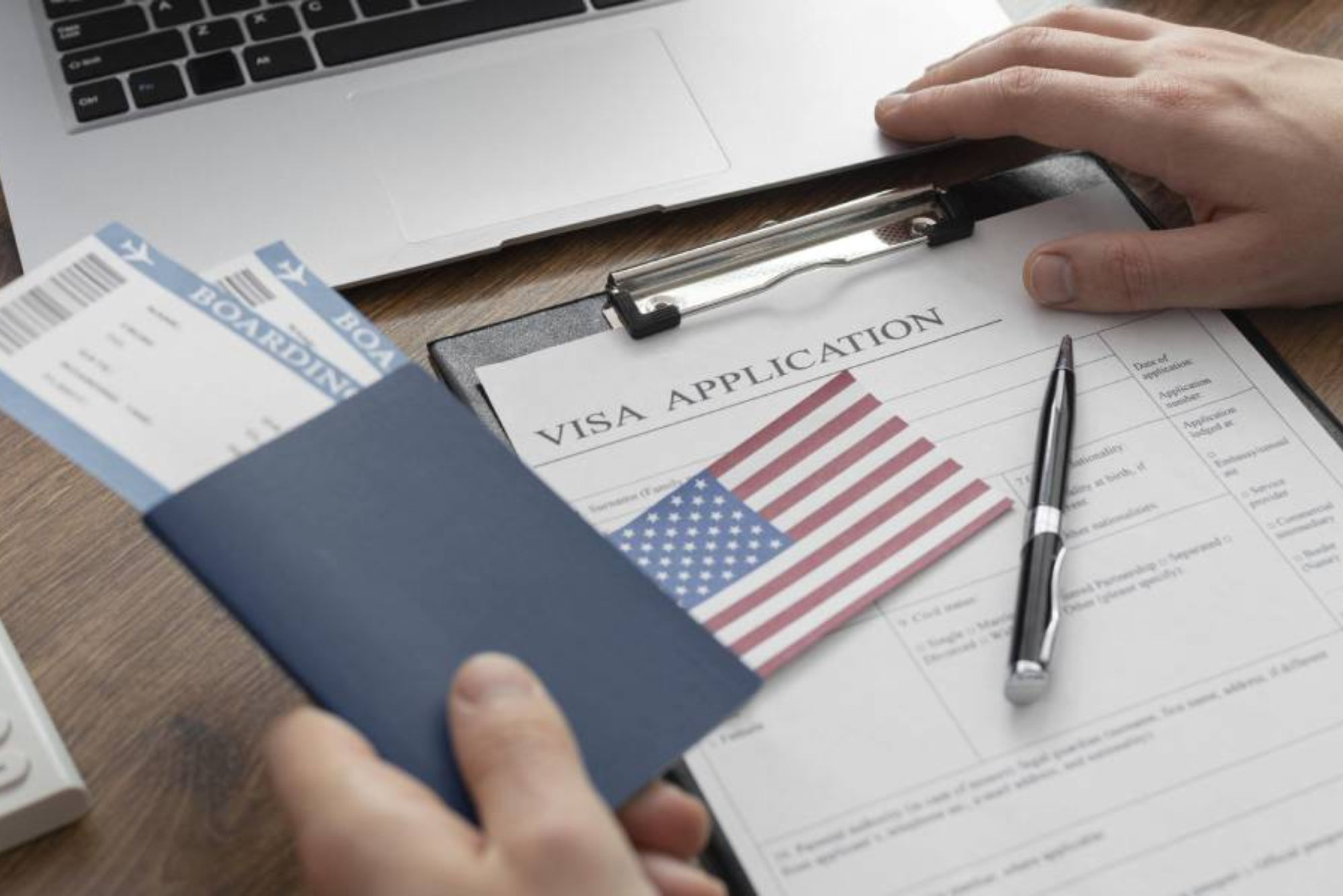

The 2024 fee increase implemented by the State Department was one of the largest single adjustments to US nonimmigrant visa fees in over a decade, with the standard B1/B2 tourist visa fee rising from $160 to $185. Understanding where those increases landed and which visa categories were affected most significantly is the essential first step in cost planning for any 2026 US visa application. For applicants specifically researching the H1B visa cost structure — which involves a separate and considerably more complex USCIS fee framework — a dedicated breakdown is available at the H1B visa price guide for 2026 on TourTutors.
Understanding the US Visa Fee Framework
US visa fees do not operate as a single charge. They are composed of multiple distinct components that apply differently depending on visa category, nationality, and whether the visa is processed at a consulate abroad or through USCIS domestically. Before examining specific visa types, understanding these components prevents budget errors at every stage of the process.
The Machine Readable Visa (MRV) fee is the primary government charge paid to the US State Department at the time of visa application. It is paid in local currency at the official exchange rate set by the US Embassy in your country, and it is non-refundable regardless of whether the visa is approved, denied, or the application is withdrawn. This fee goes directly to the State Department and funds consular operations worldwide.
The SEVIS fee is a separate charge collected by the Department of Homeland Security that applies specifically to student (F and M visa) and exchange visitor (J visa) applicants. It funds the Student and Exchange Visitor Information System — the database that tracks international students and exchange visitors in the US. The SEVIS fee is paid online through the SEVIS website before the visa interview appointment and is in addition to the MRV fee, not a substitute for it.
Reciprocity fees are charged by some US embassies to nationals of countries that charge similar fees to US citizens applying for their visas. These are assessed on the basis of bilateral reciprocity and apply only to specific nationalities. They add onto the MRV fee and must be paid at the consulate, typically in cash in the local currency equivalent.

US Tourist Visa Fee (B1/B2) in 2026
The B1/B2 nonimmigrant visa — the standard tourist and business visitor visa for the United States — is the most commonly applied-for US visa category globally. Following the 2024 fee increase, the MRV fee for a B1/B2 visa is $185 USD, payable in local currency at the US Embassy rate before the consular appointment.
| Cost Component | Amount (USD) | Who Pays | Refundable? |
|---|---|---|---|
| MRV fee (B1/B2 visa) | $185 | Applicant | No |
| Reciprocity fee (nationality-dependent) | $0 – $200+ depending on nationality | Applicant | No |
| Visa Application Center service fee | $0 – $25 (varies by country) | Applicant | No |
| Document translation (if non-English) | $30 – $150 per document | Applicant | No |
| Expedited appointment (if available) | Varies by embassy | Applicant (optional) | No |
The B1/B2 visa is typically valid for 10 years with multiple entries and a maximum stay of 6 months per visit for most nationalities. This makes the per-visit cost exceptionally low over time — a single $185 fee amortised across a decade of visits is less than $20 per year. The challenge for most B1/B2 applicants is not the fee itself but the interview appointment wait time, which at high-demand posts like Mumbai, Lagos, and Manila has historically stretched to several hundred days during peak periods.
US Student Visa Fees (F1 and M1) in 2026
International students applying for an F1 (academic) or M1 (vocational) student visa in 2026 face a two-part mandatory fee structure: the MRV fee paid to the State Department and the SEVIS I-901 fee paid to the Department of Homeland Security. Both are required before the visa interview can proceed.
| Fee Component | F1 Visa (Academic) | M1 Visa (Vocational) | Paid To |
|---|---|---|---|
| MRV fee | $185 | $185 | State Department |
| SEVIS I-901 fee | $350 | $200 | Department of Homeland Security |
| Total mandatory fees | $535 | $385 | — |
| English language test (TOEFL/IELTS) | $185 – $250 | $185 – $250 | Test provider |
| Document preparation / translation | $50 – $300 | $50 – $200 | Service provider |
| Total All-In Range (F1) | $770 – $1,285 | — | — |
The SEVIS fee must be paid online at fmjfee.com using a credit or debit card before the DS-160 visa application is submitted. The payment generates a receipt with a unique transaction ID number that must be presented at the visa interview — without it, the interview cannot proceed. Students should pay the SEVIS fee at least 3 business days before their interview appointment to ensure the payment is registered in the system. For students from Pakistan planning to study in the US, dedicated cost guides covering the full application cost and process from Pakistan are available at the Pakistan to USA visa price guide on TourTutors.
J1 Exchange Visitor Visa Fee in 2026
The J1 visa — used by exchange visitors, researchers, au pairs, camp counselors, and a wide range of cultural and professional exchange programs — has a slightly different fee structure from the student visa categories. The SEVIS I-901 fee for J1 applicants is $220, compared to $350 for F1 students. The MRV fee remains $185, making the total mandatory government fee for a J1 applicant $405 before any additional document or service costs.
Certain J1 program sponsors — particularly US government-funded exchange programs — cover the SEVIS fee on behalf of their participants, reducing the out-of-pocket cost for the applicant. Always confirm with your J1 program sponsor before paying the SEVIS fee independently. For the complete J1 visa fee breakdown, including sponsor-covered scenarios and the nuances of the J1 two-year home residency requirement and its waiver costs, a comprehensive breakdown is available at the J1 visa price guide for 2026 on TourTutors.
US Visa Fees by Visa Category: Complete 2026 Reference Table
The following table consolidates the MRV fee for all major nonimmigrant US visa categories as of 2026. These are the State Department government fees — additional SEVIS fees, reciprocity fees, and service charges apply where noted above.
| Visa Category | Visa Type | MRV Fee (USD) | Additional Fees? |
|---|---|---|---|
| Tourist / Business | B1/B2 | $185 | Reciprocity fee (nationality-dependent) |
| Academic Student | F1 | $185 | SEVIS I-901 fee: $350 |
| Vocational Student | M1 | $185 | SEVIS I-901 fee: $200 |
| Exchange Visitor | J1 | $185 | SEVIS I-901 fee: $220 |
| Fiancé(e) | K1 | $265 | USCIS I-129F fee: $675 |
| Treaty Trader / Investor | E1/E2 | $205 | Reciprocity fee varies |
| Intracompany Transfer | L1 | $185 | USCIS I-129 fee: varies |
| Specialty Occupation Worker | H1B | $185 | USCIS fees: $3,380+ (employer) |
| Temporary Agricultural Worker | H2A | $185 | USCIS I-129 fee: varies |
| Diplomat / Official | A/G | Typically free | By bilateral agreement |
| Transit | C | $185 | Reciprocity may apply |
Reciprocity Fees: The Hidden Cost for Some Nationalities
One of the most frequently overlooked components of US visa pricing is the reciprocity fee — an additional charge applied by US embassies to nationals of countries that impose comparable fees on American citizens applying for their visas. The principle is simple: if Country X charges Americans $100 for a certain visa category, the US charges Country X’s nationals $100 for the equivalent US visa category.
Reciprocity fees are not uniform and not applied to all visa types or all nationalities. They vary by visa category, the specific bilateral arrangement between the US and the applicant’s country, and can change without extensive advance notice when countries update their own fee schedules for American applicants. The US Department of State maintains a reciprocity schedule at travel.state.gov where applicants can look up the specific reciprocity fee (if any) for their nationality and visa category before applying.
Common examples where reciprocity fees have historically applied include some Latin American nationalities on certain visa categories, and select Asian and African nationalities on business visa categories. Most South Asian and Southeast Asian nationalities — including Pakistani, Indian, and Filipino applicants — do not face reciprocity fees on the standard B1/B2 or F1 visa categories, but applicants should verify directly on the State Department’s reciprocity schedule for their specific nationality and visa type before budgeting.
Visa Waiver Program: When There Is No Fee at All
Citizens of 42 Visa Waiver Program (VWP) countries — including the UK, Germany, France, Japan, Australia, South Korea, and Singapore — do not need a US visa for tourist or business visits of up to 90 days. Instead, they apply for an Electronic System for Travel Authorization (ESTA) at a cost of $21 per application, valid for two years or until the passport expires, whichever comes first.
The $21 ESTA fee is dramatically lower than the $185 B1/B2 MRV fee and the total saving compounds across multiple trips within the two-year validity window. VWP travellers pay $21 once and make as many 90-day visits as they choose within that period — an arrangement that makes the US exceptionally accessible for travellers from eligible countries compared to the full visa application cost for non-VWP nationalities.
VWP countries are approved by the US Department of Homeland Security based on multiple criteria including visa refusal rates, passport security standards, and reciprocal access agreements. Notable non-VWP countries whose nationals must obtain a full US visa include India, China, Pakistan, Brazil, Mexico, South Africa, Nigeria, and most of the Middle East and Southeast Asia — which collectively represent some of the world’s largest sources of US visa applicants.
US Visa Fee for Indian Applicants in 2026
India is consistently the largest source country for US nonimmigrant visa applications globally, with hundreds of thousands of B1/B2, F1, H1B, and L1 applications processed annually at US consulates in Mumbai, New Delhi, Chennai, Hyderabad, and Kolkata. Indian applicants do not face a reciprocity fee on most standard visa categories, which means the MRV fee of $185 (paid in Indian rupees at the official embassy exchange rate) is the primary government cost.
For Indian students applying for F1 visas, the total mandatory fee is $535 ($185 MRV + $350 SEVIS). The wait time for interview appointments at India posts has been a more significant practical barrier than the fee itself — the State Department has dedicated significant resources to reducing Indian interview wait times since 2022, including interview waiver expansion for renewal applicants, but demand remains extremely high. A comprehensive guide to the US visa process from India with current fee details is available at the USA visa price guide from India on TourTutors.
US Visa Fee Payment: How and Where to Pay
The MRV fee payment process varies by country. In most countries, the fee is paid through a designated bank, online payment portal, or the US Embassy’s official visa appointment system (often operated through a contracted provider such as AITC or CGI Federal). The payment generates a receipt with a unique transaction number that must be entered to book an interview appointment — you cannot book the interview without confirming fee payment.
- Online payment: Most US embassies now accept online payment via credit card, debit card, or internet banking. The specific accepted payment methods are listed on each embassy’s visa appointment website for that country.
- Bank payment: In some countries, MRV fees must be paid at designated bank branches before an appointment can be booked. The bank issues a receipt that is then used to register and book the interview slot.
- Currency: Fees are paid in local currency at the rate set by the US Embassy for that billing period. This rate is updated periodically and is not always identical to the current market exchange rate. Check the current embassy rate before paying — overpaying in local currency because you used an old rate is a common error.
- SEVIS fee: Always paid online at fmjfee.com by credit or debit card in US dollars, regardless of which country you are applying from. International debit cards and credit cards issued by banks in most countries are accepted.
How Long Is the US Visa Fee Valid After Payment?
One practical detail that causes significant problems for applicants who pay early and then face appointment delays: the MRV fee receipt is valid for one year from the date of payment. If you pay the fee and then cannot schedule and attend an interview within 12 months — due to long wait times, personal scheduling conflicts, or application delays — the receipt expires and you must pay the fee again.
This one-year validity window is particularly consequential at high-demand posts where interview wait times have historically exceeded 12 months. At posts in Nigeria, India, and Brazil during peak application periods, some applicants have paid the fee, waited longer than 12 months for an appointment, and then been required to pay again before their interview date. If you are at a post with very long wait times, pay the fee only when you are actively scheduling an appointment — not months in advance in anticipation of applying later.
US Visa Fees Compared to Other Major Destinations
Benchmarking the US visa fee against other popular destination visas helps applicants understand where the US sits in the global visa cost landscape:
| Destination | Tourist Visa Fee (USD approx.) | Validity | Student Visa Additional Fee |
|---|---|---|---|
| United States (B1/B2) | $185 | 10 years (most nationalities) | SEVIS $350 |
| United Kingdom (Standard Visitor) | ~$140 (GBP 115) | 6 months | IHS £776/year |
| Canada (Visitor Visa) | ~$85 (CAD 100) | Up to 10 years | Separate student permit fee |
| Australia (Tourist ETA/Visitor) | ~$345 (AUD 1,600 for student) | 12 months | OSHC mandatory |
| Schengen (Europe) | ~$100 (EUR 90) | 90 days | Varies by country |
The US B1/B2 tourist visa at $185 is moderately priced relative to other English-speaking Western destinations when the long validity period is factored in. The 10-year multiple-entry validity for most nationalities means the cost per visit declines steeply with each use — a genuine value advantage over destinations like the UK (6-month validity, requiring renewal more frequently) or Schengen (90-day cap with a similarly limited stay period). Where the US falls at the higher end of global costs is the student visa category, where the combined MRV + SEVIS fee of $535 is substantially higher than Canada’s student permit fee (~$150) or Germany’s student visa (~$75).
K1 Fiancé(e) Visa Price: A Frequently Searched Category
The K1 visa — which allows a US citizen’s foreign fiancé(e) to enter the US for the purpose of marriage — carries a higher MRV fee of $265 compared to the standard $185 for most nonimmigrant categories. In addition, the US citizen petitioner must file Form I-129F with USCIS, which carries its own government filing fee of $675 — paid by the US citizen, not the foreign applicant. The total government fees for a K1 visa petition therefore exceed $940 across both stages before any attorney or service costs are considered. For applicants researching this specific pathway, a dedicated cost guide covering the K1 visa fee and process in detail is available at the K1 visa price guide on TourTutors.
Common Mistakes That Cost US Visa Applicants More Money
- Paying the MRV fee too early: The 12-month validity window on the MRV fee receipt means applicants at high-demand posts can expire their fee before getting an interview. Pay only when actively booking the appointment, not months in advance.
- Not paying the SEVIS fee before the MRV fee receipt expires: For student applicants, both fees must be paid and active at the time of the interview. If you pay the MRV fee but delay the SEVIS payment until close to the interview, a mismatch in receipt timelines can cause scheduling complications.
- Using the wrong exchange rate for local currency payment: The US Embassy sets a specific conversion rate for the MRV fee in each country. Applicants who convert $185 at the current market rate and pay that amount — rather than the embassy’s specified local currency amount — may underpay or overpay. Always use the exact local currency amount specified on the embassy’s official payment instructions.
- Confusing the MRV fee with the visa issuance fee: In some countries, after approval, there is a separate visa issuance fee (distinct from the MRV application fee) that must be paid before the passport is returned with the visa stamp. This is less common than it once was, but certain nationalities still encounter it. The reciprocity schedule on travel.state.gov specifies whether an issuance fee applies.
- Assuming a previous US visa exempts you from fees on renewal: Every US visa application — whether a first-time application or a renewal after an expired visa — requires full payment of the MRV fee. There are no renewal discounts, loyalty pricing, or fee waivers for previous visa holders except in specific interview waiver scenarios where the fee was already paid within the eligible window.
Expedited Appointment: When Urgency Has a Price
US embassies and consulates at many posts offer an expedited appointment service for applicants who have an urgent travel need — typically defined as imminent travel for a medical emergency, funeral, or urgent business — and cannot wait for the next available standard appointment. The criteria and fee for expedited appointments vary significantly by post.
At most posts, the expedited appointment service requires demonstrating the urgency with supporting documentation (medical records, death certificate, business invitation letter) and paying an additional service fee set by the visa appointment system operator. At some high-demand posts, the expedited appointment fee is $60–$100 USD equivalent on top of the standard MRV fee. At other posts, emergency appointments are granted at no additional charge but are subject to very strict eligibility criteria. Contact the specific US embassy or consulate for your post’s current expedited appointment process and any associated charges before planning an urgent application.
Frequently Asked Questions About US Visa Prices in 2026
How much is the US tourist visa fee in 2026?
The MRV fee for a US B1/B2 tourist and business visitor visa is $185 USD, paid in local currency at the embassy-specified rate before the interview appointment. This fee is non-refundable and applies regardless of visa outcome. Depending on your nationality, a reciprocity fee may apply on top of the MRV fee — check the US State Department’s reciprocity schedule at travel.state.gov for your specific nationality and visa category.
What is the SEVIS fee and how much is it in 2026?
The SEVIS I-901 fee funds the Student and Exchange Visitor Information System and is paid separately from the MRV fee. For F1 academic student visa applicants, the SEVIS fee is $350. For M1 vocational students, it is $200. For J1 exchange visitors, it is $220. It is paid online at fmjfee.com before the visa interview and is in addition to the $185 MRV fee — not a substitute for it.
Does the US visa fee change based on nationality?
The base MRV fee ($185 for most nonimmigrant categories) is the same regardless of nationality. However, reciprocity fees — additional charges applied to nationals of countries that impose comparable fees on US citizens — vary by nationality and visa type. Citizens of most South Asian and Southeast Asian countries do not face reciprocity fees on standard tourist and student visa categories. Always verify at travel.state.gov before applying.
Is the US visa fee refundable if my visa is denied?
No. The MRV fee is explicitly non-refundable under all circumstances — whether the visa is denied, the interview is a no-show, the application is withdrawn, or the applicant is found ineligible. The SEVIS fee is also non-refundable in most scenarios. This makes thorough document preparation before applying critical — a denied application means the full fee must be paid again for any reapplication.
How long is my MRV fee receipt valid?
The MRV fee receipt is valid for one year (12 months) from the date of payment. The interview must be attended, and the application submitted, within this 12-month window. Applicants at posts with very long wait times should pay the fee only when actively booking an interview slot — not months in advance — to avoid the receipt expiring before the interview can be conducted.
Can I get a US visa without paying the SEVIS fee?
No — for F1, M1, and J1 visa categories, the SEVIS I-901 fee is mandatory and must be paid before the interview. Failure to pay it — or presenting a SEVIS receipt that does not match the student’s SEVIS ID number — results in the interview being unable to proceed. Some government-funded J1 program sponsors pay the SEVIS fee on behalf of their participants; always confirm with your sponsor before paying independently.
Conclusion: Budget the True Visa Price for USA in 2026 Before You Apply
The visa price for USA in 2026 is not a single number — it is a framework of fees that varies by visa category, nationality, urgency, and application complexity. For most tourist applicants, the total cost is $185 (MRV fee) plus any reciprocity fee for your nationality, plus modest document preparation costs — a realistic all-in figure of $200–$400 for straightforward applications. For student visa applicants, add $350 in SEVIS fees for a total of $535 in mandatory government fees before any language test, translation, or application service costs. For employer-sponsored work visas, the employer-side USCIS costs dominate the financial picture and are covered in the dedicated employer fee guides. Whatever your visa category, apply through official channels, budget conservatively for all fee components, and never rely on a fee total that omits the SEVIS, reciprocity, or service charge layers. For applicants seeking a complete end-to-end US visa cost guide covering multiple visa types and origin countries, the full pricing guides on TourTutors provide ongoing reference coverage for 2026 and beyond.