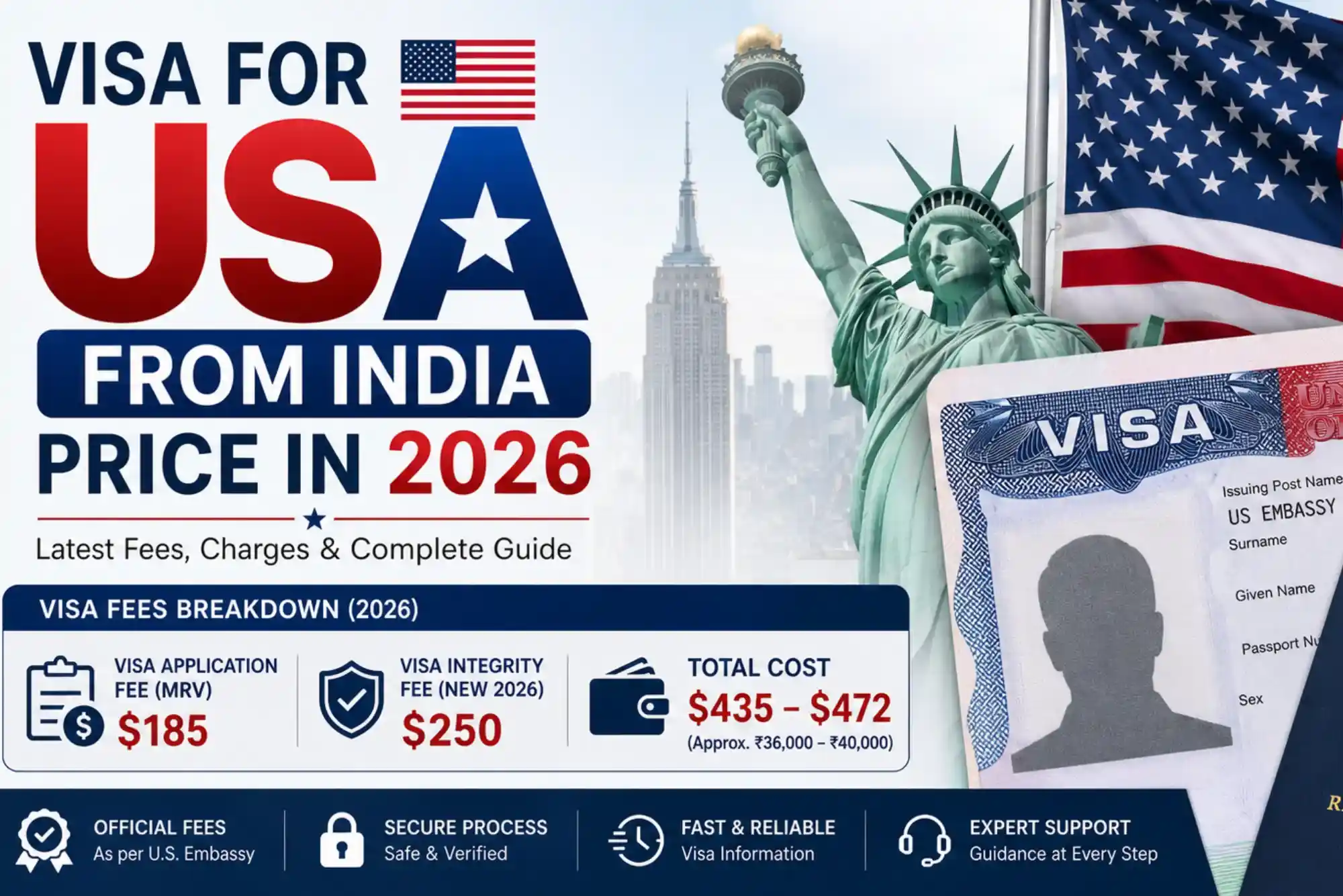

Between the MRV application fee, SEVIS charges, biometric appointments, and optional service fees, the actual price of a US visa from India in 2026 is significantly more than the headline number suggests. This guide breaks every cost down clearly so you can budget with confidence.
Understanding the US Visa Fee Structure for Indian Applicants
The United States does not operate a single flat visa fee. Instead, the total cost is made up of several distinct components — each collected by different parties at different stages of the application. The most important of these is the MRV fee (Machine Readable Visa fee), which is the non-refundable application fee charged by the US Embassy and payable before your interview is even scheduled.
Unlike many countries where a rejected application still allows partial refunds, the US Embassy retains the MRV fee regardless of the outcome. Understanding this upfront is essential — every rupee you spend on this visa is committed the moment you pay.
Non-Refundable Rule: The MRV application fee is collected before your interview and is not refunded if your visa is denied. It is, however, valid for one year — meaning if your interview date is unavailable within that window, you can reschedule without repaying, but you cannot reclaim the fee under any other circumstance.
US Visa Fee Table for Indian Applicants — 2026
| Visa Category | Visa Type | Purpose | MRV Fee (USD) | Approx. INR | Validity |
|---|---|---|---|---|---|
| B1/B2 Most Applied | Tourist / Business | Tourism, family visits, business meetings | $185 | ₹15,400–₹15,700 | Up to 10 years |
| F1 Student | Academic Student | University / college enrollment | $185 | ₹15,400–₹15,700 | Duration of study |
| M1 | Vocational Student | Non-academic / vocational programs | $185 | ₹15,400–₹15,700 | Duration of program |
| H1B Work | Specialty Occupation | Employment by US company | $205 | ₹17,000–₹17,400 | 3 years (extendable) |
| L1 | Intracompany Transfer | Transfer within multinational company | $205 | ₹17,000–₹17,400 | 1–3 years |
| J1 | Exchange Visitor | Research, teaching, cultural exchange | $185 | ₹15,400–₹15,700 | Program duration |
| O1 | Extraordinary Ability | Arts, science, sports, business | $205 | ₹17,000–₹17,400 | Up to 3 years |
| C1/D | Transit / Crew | Transit or airline/ship crew | $185 | ₹15,400–₹15,700 | Varies |
| K1 | Fiancé(e) Visa | Marrying a US citizen | $265 | ₹22,000–₹22,500 | 6 months (single entry) |
INR equivalents are approximate and based on prevailing exchange rates. Always check the current rate at the time of payment as the US Embassy collects fees in INR through designated bank partners in India.
The Real Total Cost: All Fees Included
Most cost guides stop at the MRV fee. The actual amount most Indian applicants spend is considerably higher once all mandatory and optional charges are included. Here is a realistic breakdown across the most common cost categories:

How the Application Process Works in India
The US visa process from India follows a structured sequence. Understanding each stage helps you time your costs correctly and avoid common delays.
SEVIS Fee: What Student Visa Applicants Must Know
Indian applicants applying for F1 (student), M1 (vocational), or J1 (exchange visitor) visas must pay a separate SEVIS fee to the US Immigration and Customs Enforcement (ICE) before their visa interview. This is entirely separate from the MRV fee and is paid on the official SEVIS website.
The SEVIS fee for F1 and M1 applicants is $350 (approximately ₹29,000). For J1 exchange visitors, the fee is $220 (approximately ₹18,300). This fee is non-refundable and must be paid at least three days before your visa interview date to allow the payment to process in the system.
For Indian students mapping out the full cost of studying in the US — including tuition, accommodation, and travel — reviewing detailed price guides for international destinations and living costs can help you build a more complete financial picture before committing.
Interview Wait Times in 2026: The Hidden Cost of Delay
One aspect of the US visa process that directly affects cost — but is rarely discussed in fee guides — is interview wait time. In recent years, demand for US visa appointments in India has consistently outpaced consulate capacity, leading to wait times that in some cities stretch from several months to over a year for B1/B2 tourist visas.
Wait times are significantly shorter for student visa interviews (F1), which the US Embassy prioritizes. Most F1 applicants in India can secure an appointment within four to eight weeks of their I-20 start date, provided they apply promptly after receiving their university acceptance.
Which City Should You Apply From?
You are not required to apply from the consulate closest to your city of residence. Indian applicants can book appointments at any of the five US consulates. During periods of high demand, checking appointment availability across multiple cities — including Chennai and Kolkata, which often have shorter wait times than Delhi and Mumbai — can save you weeks or months.
Visa Renewal and Dropbox Eligibility
Indian applicants who have held a US visa in the past may be eligible for the Dropbox renewal process — allowing them to renew their visa without attending a personal interview. This is available to applicants whose previous B1/B2 visa expired within the last 48 months and who have no adverse immigration history.
Dropbox renewal carries the same MRV fee of $185 but eliminates the need to travel to a consulate city, significantly reducing the total cost for eligible applicants. Documents are submitted via courier and the renewed visa is returned the same way.
For those planning to combine their US travel with side trips or adventures, it helps to plan early — checking out resources like dune buggy adventures and activity guides is a good reminder that once your visa is in hand, the real exploration can begin.
Common Mistakes That Cost Indian Applicants Money
- Paying through unofficial channels: Only pay MRV fees through the official US Embassy payment system via designated banks. Third-party payment processors are not authorized and payments made elsewhere will not be recognized.
- Incomplete DS-160: Errors or omissions on the DS-160 require a new form submission and in some cases a new appointment — wasting paid slots without refund.
- Travelling to the wrong consulate: While applicants can choose any consulate, ensure your appointment is confirmed at the location you intend to visit. Showing up at the wrong city results in a missed appointment with no refund.
- Paying a consultant for tasks you can do free: The DS-160, appointment scheduling, and document checklist preparation are all manageable without a paid consultant. Save the money for cases where specialist legal advice is genuinely needed — such as H1B or O1 applications.
If you are travelling to the US for family-related reasons or want to make the most of your trip with younger travellers in your group, reading up on family travel planning guides can offer useful inspiration for structuring your overall trip experience.
Final Word: What to Budget for a US Visa from India in 2026
The base MRV fee of $185 (approximately ₹15,400) is just the beginning. Realistically, a B1/B2 tourist visa application from India costs between ₹20,000 and ₹45,000 when all fees, document costs, and travel to the interview city are included. Student visa applicants should add the SEVIS fee of $350, pushing the total comfortably above ₹45,000 before any consultant fees.
The process is entirely manageable if you start early, pay through official channels, and treat the interview as a serious professional meeting rather than a formality. The US issues a significant number of ten-year multiple-entry visas to Indian applicants with strong ties — and for those who receive one, the per-trip cost of the visa becomes negligible over time.