
Introduction
Flying with a dog or cat can be surprisingly complicated. Your pet may be small enough to travel in the cabin, but that does not mean every soft carrier will fit beneath the airplane seat. Airline policies vary, aircraft have different under-seat spaces, and a carrier that looks perfect online may be too tall or too rigid when you reach the gate.
That is why choosing the right airline approved pet carriers requires more than looking for an “airline approved” label. There is no universal certification that guarantees a carrier will be accepted by every airline. Instead, the carrier needs to satisfy the airline’s current requirements and fit safely under the seat assigned to you. American Airlines, for example, recommends soft-sided carriers around 18 × 11 × 11 inches for its flights, while other airlines may use different limits or aircraft-specific requirements.
The best carrier therefore combines a compact under-seat design with adequate ventilation, a secure closure, a leak-resistant base, and enough interior space for your pet to remain comfortable. This guide explains what to look for and how to choose a carrier that works in the real world.
What Makes Airline Approved Pet Carriers Suitable for Cabin Travel?
The phrase “airline approved” can be misleading. Airlines generally establish their own requirements rather than giving manufacturers a universal approval certificate. IATA also states that it does not certify, approve, sell, or endorse individual commercial pet containers.
For an in-cabin flight, the most important requirement is usually straightforward: your pet must remain inside a properly secured carrier that fits completely beneath the seat in front of you.
The carrier should also be designed specifically for pets, provide sufficient ventilation, prevent accidental escape, and have a waterproof or leak-resistant bottom. Southwest, for example, specifically requires carriers to be pet carriers, leak-proof, well ventilated, and capable of fitting under the seat.

This makes soft-sided carriers particularly practical. Their flexible construction can help them conform to the available under-seat space, although they should never be compressed so severely that ventilation or your pet’s comfort is compromised.
Why Under-Seat Fit Matters More Than the “Airline Approved” Label
When shopping for airline approved pet carriers, dimensions should be one of the first things you check.
A carrier can be advertised as airline compatible and still be unsuitable for your particular flight. Aircraft seats differ, and some airlines explicitly state that available space can vary according to seat type and aircraft configuration. Southwest recommends soft-sided carriers partly because under-seat space can vary depending on where you sit.
A commonly encountered soft-carrier size is approximately 18 × 11 × 11 inches. American Airlines lists that size for soft-sided carriers, although it also notes that actual under-seat dimensions can vary by aircraft.
Before purchasing, check the airline’s current pet policy and compare its dimensions with the carrier’s external dimensions. Do not rely only on interior measurements. The outside frame, wheels, pockets, handles, and base all take up space.
If your itinerary includes multiple airlines, check every airline. The smallest permitted dimensions may determine which carrier you can realistically use.
Best Airline Approved Pet Carriers for In-Cabin Flights
Several well-known carriers are designed specifically around the challenges of cabin travel, but each has a different strength.
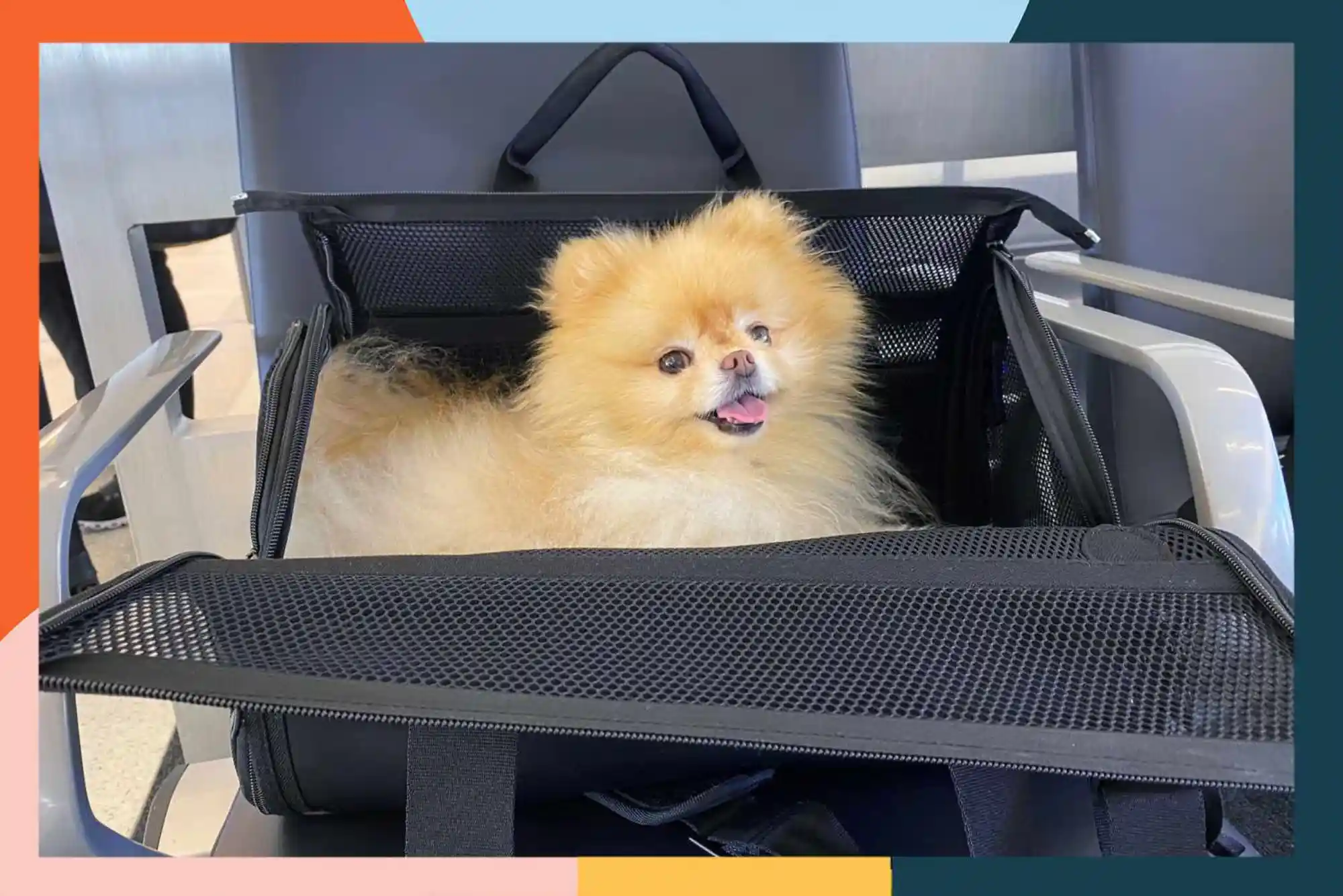
The Sleepypod Air is a premium option designed specifically for air travel. Its flexible construction is intended to compress under an aircraft seat while maintaining ventilation. It is also designed for use beyond the airplane, making it useful for owners who want one carrier for transportation from home to the airport and beyond.
The Sherpa Original Deluxe Travel Pet Carrier is another popular choice because of its flexible spring-wire frame. The construction allows the carrier to compress somewhat when placed beneath a seat while maintaining its basic structure. Its soft-sided design and multiple ventilation panels make it particularly suited to the practical demands of cabin travel.
The SturdiBag Pro takes a different approach by emphasizing flexible height. That can be useful when under-seat clearance is tighter than expected. A flexible carrier, however, should still provide enough usable interior space for the pet rather than simply being squeezed into the smallest possible opening.
For travelers looking for a more traditional carrier, the Mr. Peanut’s soft-sided airline carrier offers a reinforced base and ventilation panels. Features such as secure zippers and a stable floor can make a significant difference during airport handling.
The important point is that none of these products should be treated as universally approved. Their suitability depends on the airline, aircraft, seat location, and your pet’s actual size.
How to Choose the Right Carrier Size for Your Dog or Cat
The biggest mistake pet owners make is choosing a carrier based only on their pet’s weight.
Two animals weighing the same amount can have completely different body shapes. A long-bodied cat may need more length, while a stockier dog may require additional width. A tall pet may struggle in a carrier that technically satisfies the airline’s maximum external dimensions.
Measure your pet while standing. You should know the approximate length from the nose to the base of the tail, the height from the floor to the top of the head or ears, and the widest part of the body.
Your pet should be able to remain in a natural position appropriate to the carrier and airline requirements. Airline and animal-transport guidance emphasizes adequate room for normal movement, ventilation, and safe containment.
There is an unavoidable compromise with cabin travel: the carrier must fit into a relatively small space beneath the seat, but your pet still needs enough room to travel safely and comfortably. If your animal cannot fit comfortably within the airline’s permitted carrier dimensions, choosing a smaller carrier simply to make the flight possible is not an appropriate solution.
Soft-Sided vs. Hard-Sided Pet Carriers
For most in-cabin flights, soft-sided carriers are easier to work with because they can adapt slightly to the space beneath an airplane seat.
A hard-sided carrier provides more structural rigidity and can be useful in situations where the airline permits it and sufficient space is available. However, the fixed shape can make under-seat storage more difficult.
Soft-sided carriers also tend to be easier to carry through terminals. Many include shoulder straps, padded handles, luggage sleeves, or additional pockets for documents and small travel supplies.
The downside is that flexible materials can collapse if pushed too far. A carrier that bends significantly may restrict ventilation or reduce your pet’s usable space. Flexibility should therefore be treated as a fitting advantage, not permission to force an oversized carrier underneath a seat.
Ventilation Is a Safety Feature, Not a Luxury
Good ventilation is one of the most important characteristics of airline approved pet carriers.
Look for generous mesh panels positioned on multiple sides. This allows air to circulate even when the carrier is placed beneath a seat.
Ventilation is particularly important because the carrier may spend hours inside terminals, during boarding, beneath the seat, and while waiting for luggage after landing. A design that looks attractive but has only a small ventilation opening may be uncomfortable during a long travel day.
The carrier should also have mesh that is strong enough to resist scratching and chewing. Zippers should close securely, and there should be no obvious openings through which a determined cat or small dog could escape.
A Waterproof Base Can Save Your Trip
Travel accidents happen, particularly when pets are stressed.
A leak-resistant bottom helps protect both your pet and the aircraft environment. Look for a carrier with a firm, waterproof or water-resistant base that can be cleaned easily.
Adding a thin absorbent pad inside the carrier is also practical. Avoid filling the carrier with bulky bedding that reduces the available space. A familiar but appropriately sized blanket or washable liner can provide comfort without taking over the interior.
It is worth carrying an extra liner in your luggage as well. A small amount of preparation can make an unexpected accident much easier to manage.
What to Look for in the Carrier’s Construction
The best airline approved pet carriers should feel secure without being unnecessarily heavy.
Pay attention to the stitching around handles and shoulder straps. Check whether the base remains reasonably stable when lifted. Examine the zippers and make sure they do not open easily when pulled from inside.
A strong carrier frame is also helpful. However, an overly rigid frame may prevent the bag from fitting beneath a seat.
Ideally, the carrier should strike a balance between structure and flexibility. It should hold its shape around your pet while still allowing modest compression where the airline permits it.
How to Prepare Your Pet Before Flying
Even the best carrier cannot solve a pet’s travel anxiety if the animal has never used it before.
Introduce the carrier at home several days or weeks before the journey. Leave it open in a familiar area and allow your pet to investigate it voluntarily. Place familiar bedding inside and reward calm behavior.
Gradually increase the amount of time your pet spends inside. You can also practice carrying the carrier around the house or taking short car trips if your pet tolerates them.
The goal is for the carrier to become a familiar environment rather than something associated only with the airport.
Do not use sedatives simply to make a flight easier without discussing the issue with your veterinarian. Medication can affect an animal differently at altitude and should be considered on an individual basis.
Airline Rules You Should Check Before Booking
Buying the carrier is only one part of preparing for an in-cabin flight.
First, confirm that your airline accepts pets in the cabin on your particular route. Some airlines have restrictions based on destination, aircraft, cabin, or the number of pets already booked.
Next, verify the maximum carrier dimensions. Do not assume the dimensions shown on a shopping website are current.
You should also check whether the airline charges a pet fee, whether advance reservations are required, whether only cats and dogs are permitted, and whether there are restrictions on certain seats.
For example, Southwest requires the carrier to remain under the seat and notes that some seat locations provide less available space. American Airlines similarly states that soft-sided carriers are recommended and that the pet must fit comfortably inside the closed carrier.
If you have a connecting flight, check the rules for every operating airline. Your carrier must work for the entire itinerary, not merely the first flight.
Common Mistakes to Avoid When Buying Airline Approved Pet Carriers
One common mistake is buying the largest carrier possible because it appears more comfortable. Bigger is not automatically better when the carrier has to fit beneath an aircraft seat.
Another mistake is trusting the words “airline approved” without checking the airline’s own website. That phrase is generally a marketing description rather than a universal certification.
Some owners also measure only the pet and forget to measure the carrier itself. Remember that the airline cares about the external dimensions and whether the carrier can actually be stowed.
Finally, avoid waiting until the day before departure to introduce your pet to the carrier. A comfortable, familiar carrier is far more useful than an expensive carrier your pet refuses to enter.
Choose the Carrier Around Your Flight, Not the Other Way Around
The best airline approved pet carriers are not necessarily the largest, most expensive, or most heavily advertised. The right choice is the carrier that fits your airline’s current requirements, fits safely beneath the seat, provides dependable ventilation, and gives your dog or cat enough room to travel comfortably.
Soft-sided models such as the Sleepypod Air, Sherpa Original Deluxe, SturdiBag Pro, and similar under-seat designs can be useful starting points, but no product should be considered universally approved. Airline policies and aircraft configurations can change, so verify the rules immediately before your trip.
Before booking, measure your pet, measure the carrier, check every airline on your itinerary, and confirm the current under-seat requirements. A few minutes of preparation can prevent an expensive and stressful problem at the airport.
FAQs
What size pet carrier is allowed under an airplane seat?
There is no single size that works for every airline. Around 18 × 11 × 11 inches is a common soft-carrier dimension on several major U.S. airlines, but requirements vary. American Airlines, for example, lists 18 × 11 × 11 inches for soft-sided carriers while noting that aircraft-specific under-seat dimensions can differ. Always check the current rules for your specific flight.
Can I bring a soft-sided pet carrier on a plane?
Yes, many airlines permit soft-sided pet carriers for small dogs and cats traveling in the cabin. Soft carriers are often practical because they can accommodate variations in under-seat space. The carrier must still meet the airline’s size, ventilation, security, and stowage requirements.
Are airline approved pet carriers really approved by airlines?
Not necessarily. There is no universal airline approval certificate for commercial pet carriers. IATA specifically states that it does not certify or endorse individual pet containers. Airline acceptance depends on that airline’s rules and the carrier’s ability to fit safely under the seat.
Can a dog stay in a carrier under the airplane seat?
For airlines that permit in-cabin pets, the pet generally needs to remain inside the closed carrier during the flight and the carrier must be properly stowed beneath the seat. Exact requirements vary by airline, so check the policy before traveling.
Should a pet carrier be bigger than my dog?
It should provide enough space for your pet to remain comfortable while staying within the airline’s maximum dimensions. A carrier that is excessively large may not fit beneath the seat, while one that is too small can restrict your pet’s movement and comfort.
Is a hard or soft pet carrier better for flying?
For many in-cabin travelers, a soft-sided carrier is more practical because it can accommodate limited under-seat clearance. A hard-sided carrier can work when specifically permitted and when its dimensions fit the aircraft. The airline’s requirements should determine the choice rather than appearance alone.
How do I know if my pet carrier will fit under the airplane seat?
Start with the airline’s published maximum dimensions, then compare them with the carrier’s external measurements. If your trip involves multiple airlines or aircraft, check each segment. When possible, choose a carrier that does not depend on extreme compression to fit.