
Introduction
Taking your dog for a drive can be one of the easiest ways to turn an ordinary trip into an adventure. But once the car starts moving, your dog needs more than a comfortable place to sit. A sudden stop, sharp turn, or collision can send an unrestrained dog forward with considerable force, putting the dog and human passengers at risk.
That is why choosing the right dog seat belts and crash-tested car hammocks matters. A properly designed restraint can help limit your dog’s movement during sudden braking or a crash, while a well-fitted car hammock can create a more secure and comfortable backseat environment.
There is an important distinction, however: a hammock and a crash-tested restraint do different jobs. A hammock primarily protects the vehicle’s seats and helps prevent a dog from falling into the footwell, while a properly tested harness or restraint is designed to manage crash forces. The Center for Pet Safety (CPS) maintains a list of products that have undergone its independent certification process, making independent testing an important factor when evaluating safety claims.
Why Dog Car Safety Matters
Many dogs naturally move around the vehicle. They may climb between seats, put their paws on the center console, or try to sit beside their owner. Although these behaviors can look harmless during normal driving, they become dangerous when the vehicle brakes suddenly.
An unrestrained dog can also distract the driver. A dog moving around the cabin may interfere with steering, pedals, visibility, or other controls.
The purpose of a good car restraint is therefore not simply to keep your dog in one place. It is to reduce unnecessary movement and help create a predictable, controlled travel position.

For backseat travel, the safest setup generally involves a restraint specifically designed for vehicle use rather than attaching an ordinary walking leash or collar to a seat belt. Independent testing is particularly valuable because pet restraints do not have the same universal regulatory framework that governs child passenger restraints.
Understanding Dog Seat Belts and Crash-Tested Car Hammocks
The phrase “dog seat belt” can mean several different things. Some products are simply short tethers that connect a dog’s harness to a vehicle seat-belt system. Others are components of a complete crash-tested restraint system.
This distinction is extremely important.
What a Dog Seat Belt Does
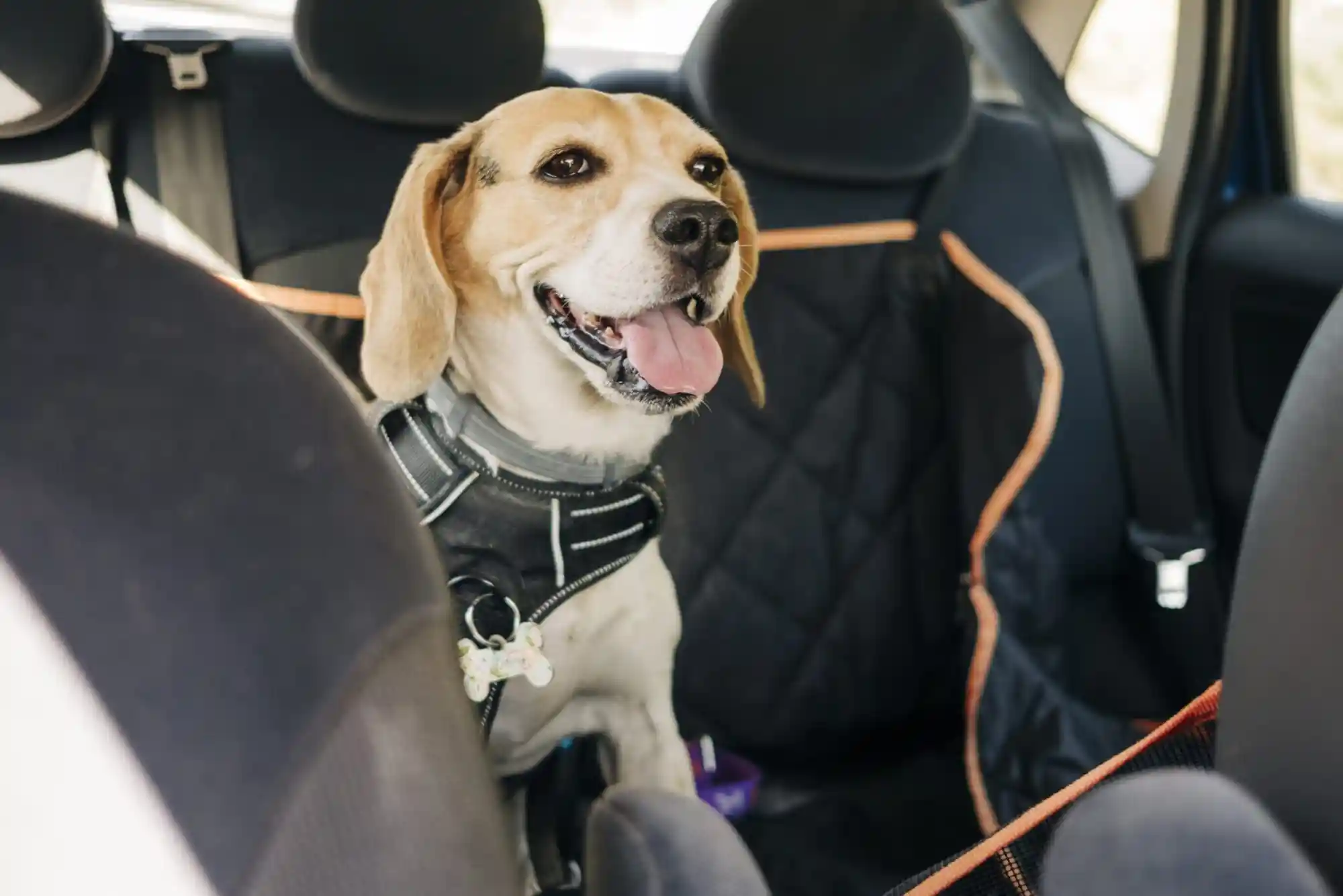
A properly designed dog seat-belt system is intended to restrict how far a dog can travel inside the vehicle. Depending on the design, it may connect to a crash-tested harness using a vehicle seat-belt attachment or another approved connection method.
The harness is particularly important because crash forces need to be distributed across appropriate areas of the dog’s body. A collar is not an appropriate substitute for a properly designed vehicle harness.
Owners should also pay attention to tether length. Center for Pet Safety warns against extension tethers and zipline-style systems because excessive movement can increase injury risks.
What a Car Hammock Does
A dog car hammock stretches between the front and rear headrests, creating a protected area over the back seat. It can help prevent your dog from slipping into the footwell and can protect upholstery from mud, hair, scratches, and accidents.
However, a hammock should not automatically be considered a crash restraint.
A hammock made from strong waterproof fabric may be excellent for protecting your vehicle while making your dog more comfortable, but fabric strength alone does not demonstrate crash protection. Independent crash testing needs to evaluate the restraint system itself.
The most sensible approach is to use the hammock as part of the travel environment while relying on a properly fitted, independently tested restraint for actual crash protection.
What “Crash-Tested” Really Means
One of the biggest problems when shopping for dog travel equipment is the phrase “crash tested.”
A product description may say that a harness or tether has been tested, but that does not necessarily tell you who performed the test, what equipment was used, what speed was involved, or whether the product actually passed an independent evaluation.
The Center for Pet Safety conducts dynamic testing and evaluates factors such as excursion distance, strap movement, and whether the restraint remains intact during testing. Its published information shows why simply seeing the words “crash tested” on packaging is not enough.
Look for Independent Verification
Independent certification provides more useful information than a vague manufacturer’s statement.
CPS says its certified products must meet independently developed safety standards, along with requirements related to product quality control and truthful marketing.
When researching a restraint, look for the actual testing organization and the specific product or model covered by the certification. Do not assume that every accessory sold by the same manufacturer has automatically undergone the same testing.
Check the Weight Range
Your dog’s actual weight matters.
A restraint designed and tested for one weight range should not automatically be assumed to provide equivalent protection for a much heavier or differently built dog. Before purchasing, check the manufacturer’s weight range and fitting instructions.
A snug, correctly positioned harness is also essential. A restraint that is too loose may allow excessive movement, while an incorrectly fitted harness may not distribute forces as intended.
How to Choose Dog Seat Belts for Backseat Safety
Choosing dog seat belts should involve more than looking at the price or reading a few customer reviews.
Start by considering your dog’s size, body shape, temperament, and how frequently you travel. A calm small dog and a large, energetic dog may require very different setups.
Choose a Purpose-Built Vehicle Harness
A walking harness and a crash-tested vehicle harness are not necessarily the same thing.
A walking harness is primarily designed for controlling a dog during walks. A vehicle restraint must deal with sudden deceleration and therefore requires a different safety objective.
Look for a harness specifically intended and tested for vehicle travel. If the manufacturer claims independent crash certification, verify that the exact model is included in the testing or certification information.
Avoid Long Extension Tethers
Long, elastic, or extension-style tethers may appear attractive because they allow dogs more freedom to move around.
That freedom can be a disadvantage during a crash.
CPS specifically advises against extension tethers and zipline-style accessories, noting that they can allow excessive movement and may undermine the protective purpose of a tested harness.
For safety-focused travel, controlled movement is generally preferable to giving a dog a large roaming area.
Use the Back Seat
Keeping your dog in the back seat provides physical separation from the driver and reduces the chance of the dog interfering with vehicle controls.
It also gives you more flexibility when using a hammock, harness, or other restraint system.
A properly fitted backseat arrangement should allow the dog to sit, stand, and lie down comfortably without giving them enough slack to roam freely around the vehicle.
How to Choose a Safe Dog Car Hammock
A good car hammock should complement your restraint rather than replace it.
Look for Seat-Belt Access
One of the most useful features is an opening that allows the vehicle’s seat-belt buckle to remain accessible.
This matters because a hammock should not force you to choose between protecting the seat and securing your dog. Some covers include zipper openings or split sections that allow restraint equipment to pass through while keeping most of the seat covered.
Prioritize Secure Attachment Points
Headrest straps should be adjustable and capable of staying in position while the dog moves naturally.
A hammock that constantly slips forward or sideways may become uncomfortable and can create gaps where a dog could become trapped or fall into the footwell.
Choose Durable, Easy-Clean Materials
Water-resistant or waterproof materials are especially useful for dogs coming back from beaches, parks, hikes, or rainy walks.
Quilted construction can also make the back seat more comfortable while protecting the upholstery from claws and dirt.
But remember: durable fabric is not the same thing as crash certification.
Dog Seat Belts vs. Car Hammocks: What Is the Difference?
The simplest way to understand the difference is to think about their jobs.
A dog seat belt or crash-tested harness is intended to restrain the dog.
A car hammock is intended primarily to cover and organize the backseat area.
Using both can make sense because they solve different problems. The hammock can keep your dog from slipping between seats and protect your upholstery, while the properly fitted restraint controls your dog’s movement.
A hammock should therefore never be marketed or treated as a substitute for a crash-tested restraint.
This distinction is particularly important because many attractive hammock products are designed primarily as seat covers. Their waterproof construction, stitching, clips, and quilted surfaces may be useful, but those features do not establish crash performance.
Common Mistakes Dog Owners Make
Even a high-quality restraint can be less effective if it is installed incorrectly.
One common mistake is attaching the restraint to a collar. A vehicle restraint should be used according to its manufacturer’s instructions, and a purpose-built harness is generally the appropriate interface for a dog restraint.
Another mistake is allowing too much slack. A dog should have enough room to sit and lie comfortably, but excessive tether length gives the dog more room to move before the restraint engages.
Owners also sometimes assume that a familiar walking harness is automatically safe for car travel. That assumption is not supported simply because the harness looks sturdy.
Finally, avoid choosing equipment solely because the product page uses phrases such as “safety,” “automotive grade,” or “crash tested.” Look for specific, independently verifiable testing information instead.
Are Dog Car Hammocks Safe?
A dog car hammock can be a useful part of a backseat travel setup, but it should not be treated as a crash-tested restraint unless the manufacturer provides credible independent testing for that specific product.
Its main benefits are containment within the backseat area, protection of the upholstery, and improved comfort. The actual crash restraint should come from a properly fitted harness, carrier, or other independently tested system appropriate for the dog.
This distinction is supported by current safety guidance and independent testing information: CPS’s certified-product program focuses on safety harnesses, travel carriers, and travel crates rather than treating ordinary seat-cover hammocks as crash restraints.
Are Dog Seat Belts Actually Safe?
They can be, but the design and testing matter.
A short tether marketed as a “dog seat belt” is not automatically equivalent to a crash-tested restraint. The safest purchasing process is to identify the complete restraint system, verify its independent testing, check the appropriate weight range, and follow the installation instructions carefully.
A restraint that has been independently evaluated provides substantially more information than an inexpensive tether whose only safety claim comes from its packaging.
What Should You Look for in a Crash-Tested Dog Harness?
Look for a vehicle-specific harness with documented independent testing, appropriate weight limits, secure attachment points, and a fit that keeps the dog comfortably restrained.
Pay attention to whether the testing applies to the exact model you are buying. Product names, designs, and versions can change, so a certification associated with one model should not automatically be transferred to another.
Also inspect the complete system rather than focusing only on the harness. The attachment method, tether, vehicle seat-belt connection, and installation all matter.
Can a Dog Wear a Seat Belt With a Car Hammock?
Yes. In fact, combining the two can be practical.
The hammock can cover and protect the seat while providing a more comfortable surface, while the dog’s properly fitted restraint can be connected according to its instructions.
Make sure the hammock has appropriate access for the seat-belt buckle or restraint attachment. The cover should not interfere with the restraint or create unnecessary slack.
Is It Better for a Dog to Ride in a Crate or With a Seat Belt?
The answer depends on the dog’s size, the vehicle, and the particular safety system.
Independently tested crates and harnesses are both represented in the Center for Pet Safety’s certified product program.
For some dogs and vehicles, a properly secured crash-tested crate may be practical. For others, a properly fitted crash-tested harness may work better in the back seat.
The important point is to use a system specifically designed for vehicle travel and installed according to its instructions rather than relying on an ordinary carrier, leash, or loose crate.
Dog Seat Belts and Car Hammocks
Choosing dog seat belts and crash-tested car hammocks is ultimately about understanding what each piece of equipment is actually designed to do.
A hammock can make the back seat cleaner, more comfortable, and more contained. A properly fitted vehicle harness or other independently tested restraint is responsible for controlling the dog’s movement. Neither should be confused with the other.
Before your next road trip, check your dog’s weight, measure the fit, inspect every connection, and verify any crash-testing claim rather than relying on marketing language. The Center for Pet Safety’s certification database is a useful starting point for checking independently evaluated products.
A safer car setup does not have to be complicated. Give your dog a comfortable backseat area, use a properly fitted restraint designed for vehicle travel, avoid untested extension tethers, and make sure everything is installed correctly before the car moves.
FAQs
Are dog seat belts actually safe?
Yes, when they are specifically designed for vehicle travel, properly fitted, and used according to the manufacturer’s instructions. Look for independently tested products rather than relying only on the words “crash tested” in a product description.
Should dogs wear a harness or a seat belt in the car?
A vehicle-specific harness connected to an appropriate restraint system is generally preferable to attaching a tether directly to a dog’s collar. The harness should fit securely without restricting normal breathing or movement.
Are dog car hammocks safe in a crash?
A car hammock can help keep a dog from falling into the footwell and can protect the vehicle’s seats, but a hammock alone should not automatically be considered a crash restraint. For crash protection, use an independently tested restraint designed for vehicle travel.
What is the safest way for a dog to ride in a car?
The safest setup depends on the dog and vehicle, but the key principles are to keep the dog in the back seat, prevent unrestricted movement, use a properly fitted vehicle restraint or appropriately secured travel crate, and follow the equipment manufacturer’s installation instructions.
Can a dog wear a seat belt with a car hammock?
Yes. A hammock can provide a comfortable, protective surface while a properly fitted harness and restraint limit the dog’s movement. Make sure the hammock does not interfere with the restraint or add unnecessary slack.
Can I use a regular dog harness with a seat belt?
Not necessarily. A regular walking harness is not automatically designed or tested to withstand crash forces. If safety during a collision is the priority, choose a harness specifically intended for vehicle use and verify its independent testing credentials.
How long should a dog seat-belt tether be?
The tether should provide enough room for your dog to sit, stand, and lie down comfortably without allowing excessive movement around the vehicle. Avoid unnecessarily long extension or zipline-style tethers because they can increase the distance a dog travels before restraint engages.
Where should a dog sit in the car?
For most passenger vehicles, the back seat is preferable because it keeps the dog separated from the driver and away from front-seat airbags. The dog should also be properly restrained rather than allowed to move freely around the cabin.