
Introduction
Traveling by train with a pet can be easier than flying, but every railway has different rules. Before booking, pet owners should understand carrier requirements, fees, route restrictions, and assistance animal policies. Pet-Friendly Train Travel: Amtrak, Eurostar, and UK Rail Policies Explained provides a practical guide to the major rules travelers need to know.
Amtrak generally accepts small dogs and cats on eligible journeys. UK rail services are also relatively accommodating toward dogs and other small domestic animals. Eurostar, however, has important route restrictions, especially for journeys involving London.
The key is to check the rules before purchasing your ticket. A pet-friendly railway does not necessarily mean every train, route, or service accepts animals.
Pet-Friendly Train Travel: Amtrak, Eurostar, and UK Rail Policies Explained
The biggest difference between these rail systems is how they define eligible pets and where those pets can travel.
Amtrak focuses mainly on small dogs and cats traveling in approved carriers. Its standard pet policy includes a combined pet-and-carrier weight limit of 20 pounds. Pet reservations are also required.
UK rail services generally allow up to two dogs or other small domestic animals without an additional charge. Dogs must remain on leads, while other animals normally need suitable carriers.

Eurostar has a more complicated approach. Small pets are permitted on several continental routes. However, ordinary pets are not accepted on Eurostar services to and from London. Assistance animals have separate rules.
Amtrak Pet Travel Rules
Amtrak allows small dogs and cats to travel as pets on most eligible trains. However, the rules are specific, so preparation matters.
A pet reservation is required, and reservations are limited. Amtrak states that only dogs and cats can travel under its standard pet policy. The combined weight of the pet and carrier cannot exceed 20 pounds.
Amtrak Carrier Requirements
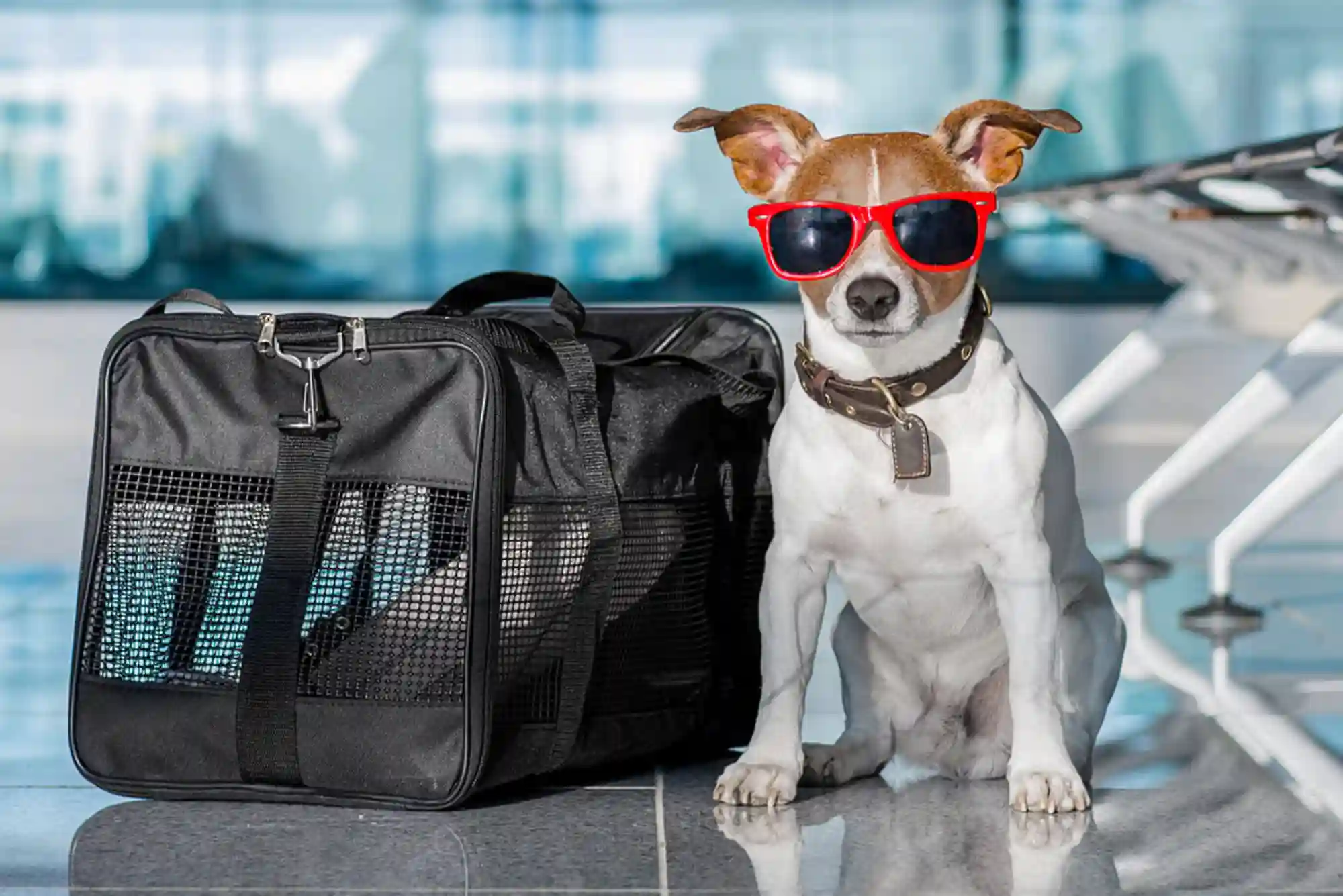
Your pet must remain inside a closed, approved carrier. The carrier can be hard-sided or soft-sided, but it must be leak-proof and properly ventilated.
The maximum carrier dimensions are 19 inches long, 14 inches wide, and 10.5 inches high. Your pet must be comfortable inside the carrier.
The carrier counts as one piece of carry-on baggage. It must remain beneath your seat or in the permitted foot space.
Pets cannot occupy passenger seats. They also cannot enter food-service cars or certain premium accommodations.
Amtrak Pet Fees and Journey Limits
Amtrak charges a pet fee for eligible travel. The fee applies to each travel segment, so connecting journeys require careful planning.
Standard pet travel is limited to trips of up to seven hours on most routes. Some services have additional restrictions.
Therefore, passengers should check the complete itinerary rather than looking only at the first train.
Amtrak also limits the number of pets traveling with each customer. A reservation should be made before arriving at the station.
Eurostar Pet Travel Rules
Eurostar requires extra planning because its pet policy depends heavily on the route.
Ordinary pets are not permitted on Eurostar trains traveling to or from London. This includes routes involving London and certain other services. Eurostar also restricts pets on some seasonal Sun and Snow routes.
However, pets are permitted on several continental routes connecting Belgium, France, Germany, and the Netherlands.
Small Pets on Continental Eurostar Routes
Small domestic animals weighing less than 6 kilograms can travel free when placed inside a suitable carrier.
The maximum carrier size is 45 × 30 × 25 centimeters. Eurostar’s conditions also state that passengers can travel with up to two pets.
Larger dogs can sometimes travel outside a carrier on eligible continental services.
They require a specific dog fare. The dog must be leashed and muzzled and remain on the passenger’s lap or the floor.
Eurostar Assistance Animals
Guide and assistance dogs and cats have separate arrangements.
For journeys involving the UK, travelers must contact Eurostar in advance. The company requires pre-approval and relevant travel documentation. Travelers should also allow extra time at the station for checks.
Pet owners should never assume that an ordinary pet policy applies to an assistance animal.
UK Rail Pet Travel Rules
UK train travel is generally straightforward for pet owners.
National Rail says passengers can bring up to two pets free of charge. This applies to dogs and other small domestic animals, subject to individual train company conditions.
Dogs must remain on leads throughout the journey and at stations. Cats and other animals should remain inside suitable carriers.
Pet Carriers on UK Trains
Non-dog animals must normally travel in a fully enclosed basket or carrier.
National Rail’s current conditions specify a maximum carrier size of 85 × 60 × 60 centimeters. The carrier must give the animal enough space to stand and lie down comfortably.
Dogs do not normally need carriers. However, keeping a small dog in a secure carrier can make busy stations easier to manage.
Animals cannot sit on passenger seats. This rule applies in both Standard and First Class.
Dogs on UK Sleeper Trains
Sleeper services can have additional conditions for pets.
National Rail permits animals on sleeper trains, but individual operators may apply additional requirements. Dogs may also attract a cleaning charge on some sleeper services.
Therefore, check the specific train company’s conditions before booking a sleeper journey.
Amtrak vs Eurostar vs UK Rail
Understanding the differences makes Pet-Friendly Train Travel: Amtrak, Eurostar, and UK Rail Policies Explained much easier to apply.
Amtrak primarily supports small dogs and cats. The pet and carrier must stay within the 20-pound combined limit. The pet must also remain inside its carrier throughout the journey.
UK rail services allow a broader range of small domestic animals. Up to two animals can generally travel without an additional fee. However, operators can introduce special conditions.
Eurostar varies by route. Continental services allow certain pets under specific conditions. London routes generally do not accept ordinary pets.
Consequently, the same pet may be accepted on one railway but refused on another.
How to Prepare Your Pet for Train Travel
Good preparation can make the journey calmer for both you and your pet.
Start by checking the exact train operator. Then confirm its current pet policy before purchasing the ticket.
Measure your carrier carefully. Check both its external dimensions and your pet’s ability to stand comfortably inside.
For longer journeys, introduce the carrier before travel. Let your pet spend short periods inside it at home.
You should also bring water and familiar comfort items. A small blanket can make an unfamiliar environment feel safer.
Avoid feeding a large meal immediately before departure. A lighter meal may reduce the risk of travel-related stomach problems.
Arrive early, especially if your pet requires documentation or special approval.
What to Pack for a Pet-Friendly Train Journey
A simple travel kit can prevent many problems.
Bring your pet’s food, water, collapsible bowl, waste bags, medication if prescribed, and cleaning supplies. Carry vaccination records when appropriate.
A familiar blanket or toy can also help your pet settle.
For dogs, keep a secure lead attached before entering the station. Busy platforms can be stressful, particularly for animals unfamiliar with trains.
For cats and smaller animals, use a secure carrier from the station entrance until you reach your destination.
Assistance Animals and Ordinary Pets Are Different
One of the most important points in Pet-Friendly Train Travel: Amtrak, Eurostar, and UK Rail Policies Explained is the difference between ordinary pets and assistance animals.
An ordinary pet travels under the railway’s pet policy. That can mean carrier restrictions, fees, weight limits, or route limitations.
Assistance animals may qualify for different arrangements. For example, National Rail states that assistance dogs travel free and are not subject to the normal pet charges.
Eurostar also has separate procedures for guide and assistance animals. Travelers may need advance approval and documentation, particularly when traveling to the UK.
Therefore, passengers should clearly identify the type of animal when making arrangements.
Common Mistakes to Avoid
Many pet travel problems happen because passengers check only the general policy.
One common mistake is assuming that every train on a network accepts pets. Route-specific restrictions can apply, particularly with Eurostar.
Another mistake is buying a ticket without reserving the pet space. Amtrak requires pet reservations on eligible journeys.
Using an oversized carrier can also create problems. Always compare your carrier’s measurements with the operator’s requirements.
Do not place your pet on a passenger seat. UK rail rules specifically prohibit animals from occupying seats.
Finally, do not assume that an assistance animal follows ordinary pet rules. Check the dedicated accessibility policy instead.
Frequently Asked Questions
Can I take my dog on a train?
Yes, dogs can travel on many train services, but the rules vary.
Amtrak accepts eligible small dogs under its pet policy. UK rail generally allows dogs on trains when they remain on leads. Eurostar allows dogs on certain continental routes but not ordinary pets on London routes.
Can I take a cat on a train?
Yes, cats are accepted by several train operators.
Amtrak permits cats under its standard pet policy. UK rail allows cats when they remain in suitable carriers. Eurostar permits small pets on eligible continental routes.
Are pets free on UK trains?
Up to two pets can generally travel free on National Rail services.
However, individual train companies may have additional conditions. Sleeper services can also involve extra charges.
Does Eurostar allow dogs?
Eurostar allows dogs on certain continental services.
Ordinary pets are not permitted on Eurostar trains to or from London. Larger dogs on eligible continental routes may travel under specific ticketing, leash, and muzzle requirements.
What size pet can travel on Amtrak?
Amtrak’s standard pet policy has a combined 20-pound limit for the pet and carrier.
The carrier must also meet Amtrak’s size requirements. Pets must remain inside the carrier during travel.
Can pets sit on train seats?
No, pets generally cannot occupy passenger seats.
UK National Rail explicitly states that animals are not allowed on seats. Amtrak requires the carrier to remain under the passenger’s seat or in the designated foot space.
Conclusion
Pet-Friendly Train Travel: Amtrak, Eurostar, and UK Rail Policies Explained shows why checking the exact operator and route is essential. Amtrak provides structured pet travel for small dogs and cats. UK rail offers broader access for small domestic animals. Eurostar has more significant route-based restrictions.