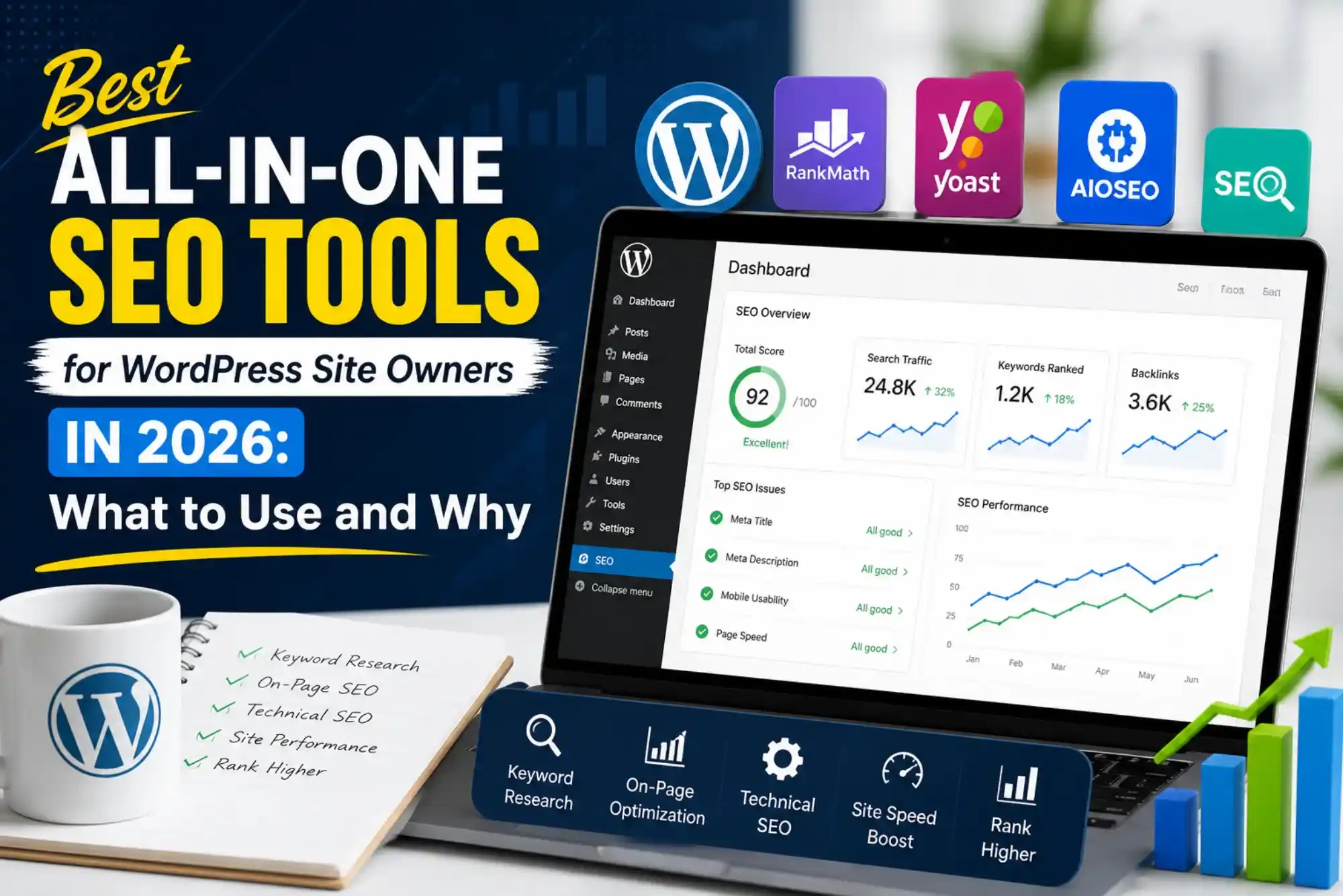

This guide breaks down the best all-in-one SEO tools for WordPress in 2026, explaining what makes each one valuable, who it’s best suited for, and how to choose the right solution based on your goals.
Why All-in-One SEO Tools Matter in 2026
SEO is no longer just about keywords and backlinks. Modern search engines evaluate user experience, content depth, site performance, and technical structure. Managing all of these factors separately is inefficient—and often leads to missed opportunities.
All-in-one SEO tools solve this problem by bringing everything together in one place. Instead of juggling multiple plugins or platforms, you can manage:
- On-page SEO optimization
- Technical SEO audits
- Schema markup implementation
- Keyword tracking and research
- Content performance insights
This unified approach not only saves time but also ensures consistency across your website.
What to Look for in an All-in-One SEO Tool
1. Ease of Use
A good SEO tool should simplify complex processes. Whether you’re a beginner or an experienced user, the interface should be intuitive and actionable.

2. Comprehensive Features
Look for tools that cover both technical and content-focused SEO. This includes everything from XML sitemaps to keyword suggestions.
3. Real-Time Recommendations
The best tools provide immediate feedback while you’re creating content, helping you optimize as you write rather than after publishing.
4. Integration with WordPress
Seamless integration ensures that your workflow remains efficient. Native plugins or direct dashboard access are ideal.
5. Scalability
Your SEO needs will grow as your website expands. Choose a tool that can scale with your traffic and content volume.
Top All-in-One SEO Tools for WordPress in 2026
1. All in One SEO (AIOSEO)
All in One SEO continues to be a top choice for WordPress users due to its balance between simplicity and advanced features. It’s particularly well-suited for small to medium-sized websites that need a reliable, easy-to-manage solution.
Key features include:
- Smart XML sitemap generation
- Schema markup automation
- On-page SEO analysis
- Local SEO tools
For websites that regularly publish structured content—such as detailed guides or informational articles like travel planning strategies for short trips—AIOSEO helps maintain consistency and clarity for search engines.
2. Rank Math
Rank Math has grown rapidly in popularity thanks to its feature-rich free version and modular design. It allows users to enable only the features they need, making it lightweight yet powerful.
Standout capabilities include:
- Advanced schema generator
- Keyword ranking tracking
- Content AI suggestions
- Google Search Console integration
It’s an excellent option for content-heavy websites that require deeper insights into performance and optimization.
3. Yoast SEO
Yoast SEO remains one of the most recognized names in the WordPress ecosystem. Its strength lies in readability analysis and structured guidance for content optimization.
Key benefits include:
- Real-time content scoring
- Internal linking suggestions
- Technical SEO automation
- Cornerstone content management
For sites focused on editorial quality, Yoast provides clear direction on improving both readability and SEO performance.
4. SEOPress
SEOPress is a powerful yet often overlooked tool that offers advanced features without overwhelming users. It’s particularly appealing for developers and agencies who want flexibility.
Its advantages include:
- White-label capabilities
- Google Analytics integration
- Content analysis tools
- Advanced schema options
It works well for websites with diverse content types, including service pages and informational posts like guides to selecting service providers, where structured data plays a key role.
5. Squirrly SEO
Squirrly SEO takes a unique approach by focusing on real-time guidance and AI-driven recommendations. It’s designed for users who want step-by-step assistance throughout the SEO process.
Core features include:
- Live SEO assistant
- Keyword research tools
- Content optimization workflows
- Performance tracking dashboards
This makes it ideal for beginners or those who prefer guided optimization rather than manual analysis.
How to Choose the Right Tool for Your Website
For Beginners
If you’re new to SEO, simplicity should be your priority. Tools like AIOSEO or Squirrly SEO provide guided workflows that help you understand what to do and why.
For Content Creators
Bloggers and publishers benefit from tools that emphasize readability and keyword optimization. Yoast SEO and Rank Math are strong choices in this category.
For Advanced Users
If you’re managing multiple websites or require customization, SEOPress or Rank Math offer greater flexibility and advanced features.
For Niche Websites
Websites with specialized content—such as technical guides or service-focused pages like in-depth repair tutorials—require tools that handle structured data and detailed optimization effectively.
Common Mistakes to Avoid When Using SEO Tools
Over-Reliance on Scores
SEO scores are helpful, but they shouldn’t dictate your entire strategy. Focus on creating valuable content rather than chasing perfect scores.
Ignoring Technical SEO
Even the best content won’t rank if your site has technical issues. Ensure your tool supports site audits and performance optimization.
Keyword Stuffing
Modern SEO prioritizes natural language. Overusing keywords can harm readability and rankings.
Neglecting Internal Linking
Internal links help search engines understand your site structure. For example, connecting related topics—like SEO strategies and practical workflow tools—improves both navigation and authority.
The Future of WordPress SEO Tools
Looking ahead, SEO tools are becoming increasingly intelligent. AI-driven recommendations, predictive analytics, and automation are shaping how websites are optimized.
In 2026 and beyond, expect tools to:
- Provide deeper user intent analysis
- Automate technical SEO fixes
- Integrate more closely with content creation workflows
- Offer personalized optimization strategies
This shift means that choosing the right tool today is not just about current features—it’s about long-term adaptability.
Final Thoughts
The best all-in-one SEO tool for your WordPress site depends on your goals, experience level, and content strategy. There is no universal solution, but there are clear patterns.
If you want simplicity and reliability, AIOSEO is a strong choice. If you need flexibility and advanced features, Rank Math or SEOPress may be better suited. And if you value guided optimization, Squirrly SEO offers a unique approach.
Ultimately, the most effective SEO tool is the one you use consistently. Pair the right platform with a well-planned content strategy, and your WordPress site will be well-positioned for sustainable growth in 2026 and beyond.
Related Reading: Affordable SEO Tools for WordPress Site Owners on a Practical Budget in 2026