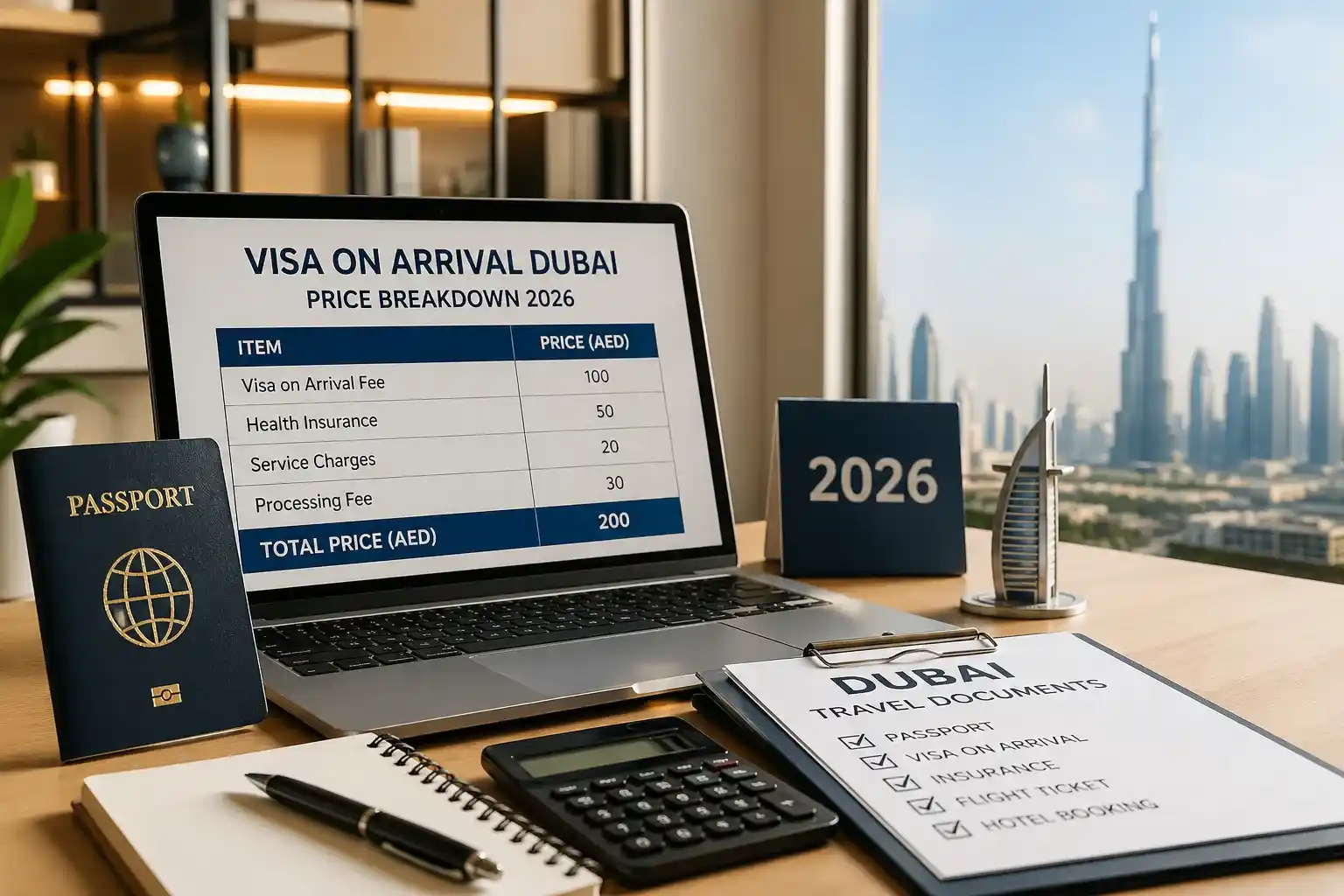

Dubai has positioned itself as one of the most accessible global travel hubs, attracting millions of visitors every year. Yet, behind the seamless airport experience lies a structured visa system that many travelers only fully understand once they arrive. The Visa on Arrival (VoA) option for Dubai in 2026 continues to be a flexible entry pathway, but the real cost is often misunderstood.
Instead of a single fixed price, the Dubai visa on arrival cost is shaped by multiple factors including nationality, duration of stay, service channels, and extension needs. This article breaks down the real financial picture so travelers can plan with clarity rather than assumptions.
Understanding the Visa on Arrival System in Dubai
The Visa on Arrival system in Dubai is designed for eligible nationalities who can enter the UAE without applying for a visa in advance. Upon arrival, immigration issues the visa directly at the airport, allowing immediate entry.
However, what appears to be a “simple free entry” concept often includes indirect costs, administrative charges, and optional extensions that affect the total travel budget.
Real Cost Structure of Dubai Visa on Arrival 2026
The actual visa on arrival cost is not always paid as a single fee at the counter. Instead, it reflects a combination of immigration policy, airline conditions, and stay duration rules.
On average, travelers may encounter a cost range influenced by:

- Entry eligibility based on passport nationality
- Airport processing and immigration verification
- Stay duration (typically 14 to 90 days depending on eligibility)
- Extension or overstay penalties if applicable
In practical terms, while the initial entry may appear free for some travelers, the overall journey can still involve administrative and extension-related costs ranging from moderate to high depending on travel behavior.
Why Dubai Visa Costs Are Not Always Straightforward
Unlike standard tourist visas, visa on arrival pricing in Dubai is shaped by policy agreements between countries. This means cost is not always a direct payment but a layered system of eligibility and service conditions.
The reason behind this structure is simple: Dubai prioritizes fast tourism flow while maintaining strict immigration control. As a result, flexibility comes with variable cost implications depending on traveler profile and stay decisions.
Typical Cost Breakdown in Real Scenarios
To understand the financial reality, it helps to break the cost into practical categories rather than assuming a fixed price.
- Entry Processing: Immigration clearance and visa stamping at arrival
- Stay Duration Adjustment: Cost impact if traveler extends stay beyond initial allowance
- Service or Airline-linked Fees: Sometimes bundled with ticketing or carrier requirements
- Overstay Charges: Penalties if visa validity rules are not followed
Each of these elements may or may not apply depending on nationality and travel behavior, which is why total cost varies significantly between travelers.
Traveler Experience: How Costs Actually Add Up
From a real-world travel perspective, the visa on arrival experience in Dubai is often smooth, but costs can gradually appear after arrival rather than before.
A typical scenario looks like this:
Arrival Stage: Entry granted at airport immigration with minimal direct payment
Stay Stage: Accommodation, insurance, and travel decisions begin influencing budget
Extension Stage: Optional extension requests introduce additional charges
Exit Stage: Compliance with stay limits avoids penalty costs
This flow shows that the visa itself is not always the major expense—it is the decisions made during the stay that shape the total financial outcome.
Grouped Cost Perspective (Travel Reality View)
Instead of viewing costs as isolated fees, it is more practical to understand them in grouped categories based on travel behavior.
Entry-Level Costs: These include immigration processing and airport verification procedures. For eligible travelers, this stage is often minimal in direct payment but essential in compliance.
Mid-Stay Adjustments: If travelers decide to extend their stay, additional fees may apply depending on visa rules and immigration approval.
Exit Compliance Costs: While not always applicable, penalties for overstaying can significantly increase total travel expenses.
For broader travel insights and regional planning, you can explore Dubai and UAE travel cost breakdowns for more context on regional pricing trends.
Step-by-Step Travel Flow (Visa Experience Path)
To understand the real journey of a traveler using visa on arrival in Dubai, the process can be visualized as a timeline rather than a static fee structure:
1. Eligibility confirmation before travel
2. Arrival at Dubai airport and immigration processing
3. Entry approval and passport stamping
4. Stay period begins under visa conditions
5. Optional extension or exit before expiry
This structure highlights that the visa is not a one-time cost but part of an ongoing travel process.
Hidden and Indirect Costs Travelers Often Miss
While the visa itself may appear simple, several indirect costs can influence the total budget of a trip to Dubai.
- Travel insurance requirements depending on airline or entry rules
- Accommodation costs during extended stays
- Transport expenses linked to visa extension visits (if needed)
- Time-based costs for processing or immigration procedures
These expenses are not always labeled as “visa costs,” but they are part of the real financial picture.
Tourist Behavior and Cost Decisions
One interesting aspect of Dubai’s visa system is how traveler behavior directly impacts total spending. Budget travelers often plan shorter stays to avoid extensions, while luxury travelers extend stays and accept additional costs for flexibility.
This creates two very different cost outcomes under the same visa system, making Dubai’s visa on arrival structure highly dynamic rather than fixed.
For experience-based travel ideas, you can also explore family and leisure activities in Dubai that often influence longer stay decisions.
Is Visa on Arrival Worth It in 2026?
Despite variable costs, the visa on arrival system remains one of the most convenient entry methods into Dubai. It eliminates pre-application delays and allows spontaneous travel planning.
For most eligible travelers, the value lies not in cost savings but in time efficiency and flexibility. This is especially important for short business trips, stopovers, and quick leisure visits.
Final Insight: Understanding the Real Value
The Dubai visa on arrival price in 2026 cannot be understood as a single number. It is a flexible system shaped by policy, traveler behavior, and duration of stay. While some travelers experience near-zero entry cost, others may incur additional expenses based on extensions and travel choices.
In essence, the real value of this visa lies in convenience rather than fixed pricing. Travelers who understand the structure in advance can manage their budget more effectively and avoid unexpected expenses during their stay in Dubai.